REVIEW · ULAANBAATAR
Mongolia Nomad Trek • On-Foot & Horseback ~ 15 Day
Book on Viator →Operated by Tusker Trail Kilimanjaro Adventures · Bookable on Viator
Golden eagles meet glacier valleys.
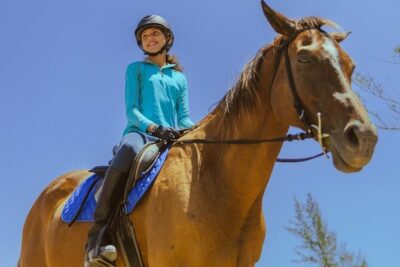
This 15-day Mongolia Nomad Trek in the Altai Mountains blends horseback and on-foot travel, so you get both the pace of nomads and the satisfaction of trekking. I also like the way the trip is led by Eddie Frank, who runs riding clinics to get you into the rider’s seat, even if you’re new to horseback.
Here’s the one main thing to consider: you’re moving through remote terrain at high elevation, with long hiking days and steep descents/ascents. If you don’t have strong physical fitness, the mountain pass days and cold-weather conditions (including the possibility of snow) can feel like a lot.
In This Review
- Key things to know before you go
- Welcome to western Mongolia’s Altai region
- Ulaanbaatar warm-up: Tuushin Hotel, theater night, and cashmere time
- Flying to Bayan-Ölgii and shifting into nomad camp mode
- Khoton Nuur: where riding starts and horse culture becomes part of your day
- River valleys and alpine forest: Tsagaan Us to Cheben Hill
- Tsagaan Gol gorges and the mountain pass push (with snow as a possibility)
- Petroglyphs and Tuvan shaman traditions near Tsagaan Gol
- A rest day with a plateau hike (plus the laundry reality)
- Potanin Glacier day: tundra, Khuiten Peak area, and the toughest grades
- Final trail day near Tavan Bogd and letting the horse run
- Getting value from $8,250: what’s included, what’s on you
- Who should book this trek (and who should think twice)
- Should you book the Mongolia Nomad Trek?
- FAQ
- What is the duration of the Mongolia Nomad Trek?
- Where does the tour start?
- Is pickup offered and is there a mobile ticket?
- What type of tour is it?
- How physically demanding is it?
- Are meals included?
- What happens if weather is poor?
Key things to know before you go
- Horse riding coaching built in: you get basics on local horses and Australian saddles, plus clinics to help you ride with more confidence
- Kazakh Altai culture, not a museum stop: you spend time with nomads in gers and watch horse games tied to Tusker Nadaam traditions
- Big physical payoff: river gorges, mountain passes, and a trek up toward the Potanin Glacier area
- Actual remote logistics made easier: waterproof Tusker duffels shift your clothing/gear to camels, so you’re not lugging everything on foot
- Ancient rock art with serious age: petroglyphs dated as far back as 11,000 years are a highlight if you like real history you can stand beside
- A private group experience: it’s a private tour/activity, so you won’t be blended into random crowds
Welcome to western Mongolia’s Altai region
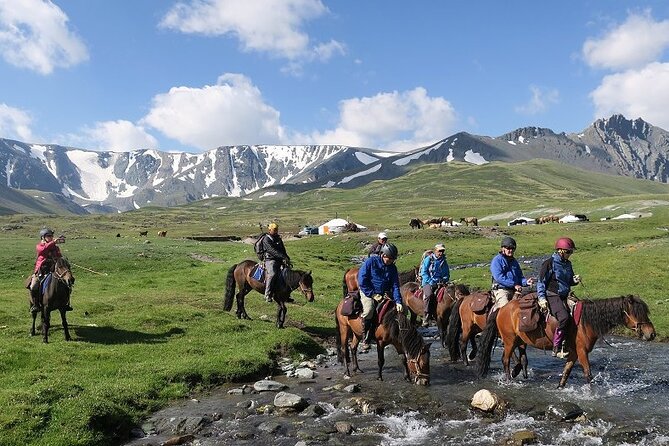
This trek is built around Mongolia’s western border with China, where the Altai Mountains shape everything: the weather, the routes, and the way people live. You’ll spend days moving through broad river valleys, alpine forest, tundra-like high ground, and open steppe. In plain terms, it’s not a sit-and-look trip. You’re traveling as the landscape demands.
What makes it work is the balance. Some days are easier on the knees and lungs because you’re on horseback or moving with the river. Other days are more focused on hiking and climbing to passes and ridgelines. That mix is a huge part of the value: you get variety without turning every single day into a full-on endurance event.
You can also read our reviews of more tours and experiences in Ulaanbaatar.
Ulaanbaatar warm-up: Tuushin Hotel, theater night, and cashmere time
Your trip starts in Ulaanbaatar (UB) at Buyant Uhaa Airport, then moves to the Tuushin Hotel for two nights. UB gives you two important things before the mountains: a chance to recover from travel and a taste of Mongolian culture that feels far from the yurt-and-glacier world you’ll soon enter.
UB discovery day is flexible. Your Mongolian guide helps you choose what to do, from restaurants and street food stands to museums and shops—especially cashmere. Then there’s a structured evening: you’re accompanied to the State Academic Theatre of Opera and Dance, with a cultural show featuring costumes and music tied to ancient Mongolian history.
Practical takeaway: use UB as your gear-check day. Make sure you’ve got what you’ll need for cold mornings, dusty trails, and long hours outdoors. Also, if you’re someone who gets antsy on day one, this UB setup is a nice buffer before the real remoteness starts.
Flying to Bayan-Ölgii and shifting into nomad camp mode
After UB, you fly about 3 hours to Bayan-Ölgii. That’s a big change, even if the flight itself is short. Once you arrive, the trip drops you into a ger-camp style rhythm, with time to explore the town’s outdoor market.
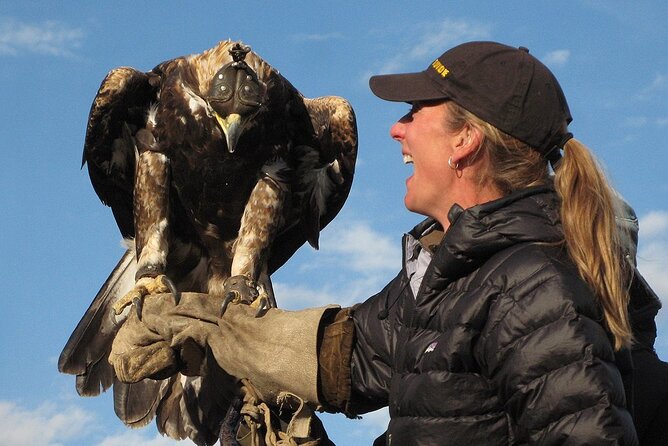
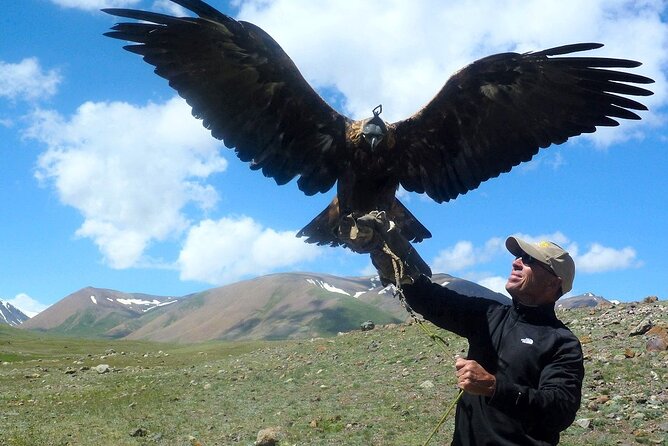
One of the most interesting early moments is the chance to try to locate a local Kazakh eagle hunter for an up-close encounter with his bird of prey. You’re not guaranteed a specific sighting, but even the attempt tells you what kind of trip this is: you’re aiming for living traditions, not staged storytelling.
Then comes a logistics move that matters: you transfer your clothing and gear into waterproof Tusker duffels. That change makes the later days more manageable, because your pack weight shifts onto the expedition’s transport (camels), while you’re free to travel with less hassle on foot and on horseback.
Khoton Nuur: where riding starts and horse culture becomes part of your day
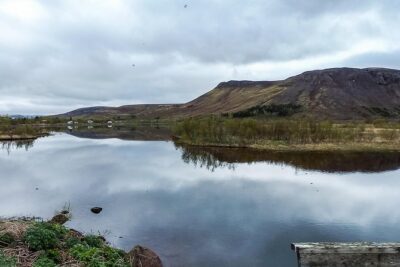
The trekking proper begins around Khoton Nuur / Hoton Nuur lake after a long drive through towns like Tsengel. You cross the Khovd River, then camp on the lakeshore for two days. This is one of the best “settle in” environments on the trip: water nearby, big skies overhead, and a staging area where you can adjust before the higher passes.
Day 5 is a key turning point because it’s when riding becomes part of the experience in a real way. Eddie gives you horse basics—using the Australian saddles—and you take a slow ride in a forested area above the lake. Even if you’re nervous, this “start gentle” approach helps you build comfort.
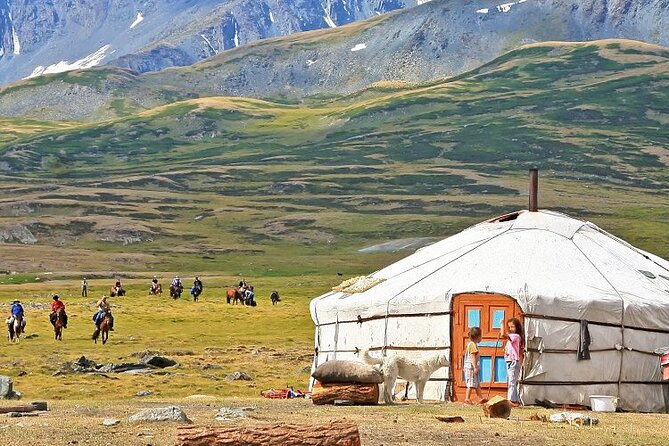
Then you step into nomad life more directly: you visit Kazakh nomads in their gers, learn about age-old traditions, and take part in nomadic horse games. A major name here is Tusker Nadaam, followed by handcrafted items brought out by local women—useful if you want real gifts that make sense as part of the journey rather than random souvenirs.
Consideration: this area is working horse culture. You’ll want to be respectful, listen carefully, and move at the pace you’re offered. If you treat it like a show, it won’t feel good for anyone.
River valleys and alpine forest: Tsagaan Us to Cheben Hill
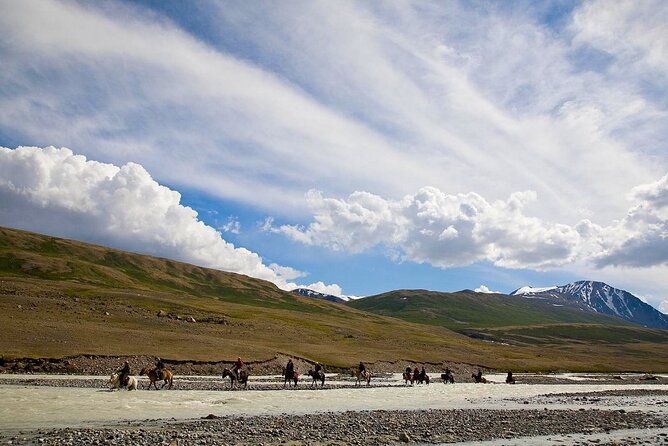
From the lake area, the trek becomes a steady march across changing terrain. You’ll load up camels for some transfers, then start trekking through the alpine forest heading north. The trip talks about glacial landforms—like ancient lake levels revealed by horizontal benches—which is a reminder that you’re walking through geology that took a very long time to form.
One practical thing I appreciate about the way this section is planned: it alternates the “work” you do on your body. Some days are shorter in distance but higher in effort because of elevation and footing. Other days are about staying consistent with the river valley pace.
A good example is the movement to Cheben Hill, where you set camp overlooking grassy plains with a few ger camps and goats below. The vibe up there is cool and tranquil in contrast to the hotter, lower-lying areas you might imagine. It’s not just scenic—it’s a recovery moment between heavier hiking segments.
Tsagaan Gol gorges and the mountain pass push (with snow as a possibility)
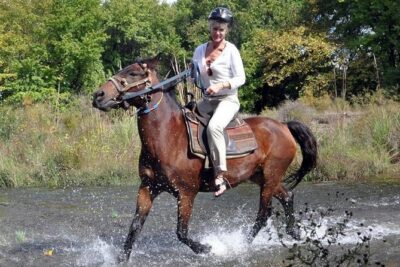
As the route develops, you start tracking the Tsagaan Gol River more closely. You’ll descend Cheben Hill toward the mouth of the river gorge, trek up the gorge on the eastern bank, and handle uneven conditions where the river can flood in places. That’s where horseback and hiking both make sense: riders keep moving along the most stable lines, while hikers go higher when they need to.
Then comes the pass day. You trek up to a mountain pass around 10,350 ft, with views over the Sheveet Uul gorge on the other side. The trip notes that if precipitation has happened, you might hike part of the day through snow and possibly dig a path. That’s a real consideration. You’re not just going for pretty photos—you’re going because you want to handle wild conditions.
After the pass, you descend steeply on foot and set up camp at Sheveed Uul Gorge. This section is high payoff for people who like a challenge, but it does require comfort with physical intensity and changing weather.
Petroglyphs and Tuvan shaman traditions near Tsagaan Gol
One of the most memorable cultural stops is a visit to a small ger community where you meet Tuvan people who follow traditional shamanistic beliefs. Lunch is followed by a discovery that’s hard to top in this region: ancient petroglyphs.
The Petroglyphs of the Mongolian Altai are described as among the largest, oldest, and most pristine concentrations of rock art in North Asia. The earliest images date from around 11,000 years ago, extending into the 9th century. That’s not abstract history. It’s something you can physically stand near while you listen, ask questions, and connect what you’re seeing today to what people saw long ago.
Why it’s valuable: it breaks up the trip’s physical rhythm with meaning. After days of altitude and movement, this kind of stop makes you feel grounded in a bigger human timeline.
A rest day with a plateau hike (plus the laundry reality)
Day 11 is a rest day, and it matters more than you might expect. You take a scenic hike to a beautiful bright-blue lake hidden up on a plateau near camp. Then you get time for practical chores—laundry is specifically mentioned—plus simply relaxing.
That mix is a smart design choice. In a remote trip, clean clothes aren’t a luxury. They can make the difference between enjoying camp evenings and feeling miserable in cold wind. If you’re the type who needs a little structure to feel happy outdoors, a planned rest day helps a lot.
Potanin Glacier day: tundra, Khuiten Peak area, and the toughest grades
The glacier segment is one of the hardest days on the whole route. You trek uphill over frost-heave terrain toward the Potanin Glacier at the foot of Khuiten Peak (14,350 ft). This is well above treeline, and the trip notes the area supports few species adapted to harsh conditions.
You’re in a zone of tundra, lichen-covered rocks, alpine meadows, and high mountain swamps. The details matter because this is the kind of terrain where footing can be tricky and weather can change fast.
Nairamdal Peak comes into focus too: it’s marked as a triple border point for Mongolia, Russia, and China. You’re not walking a passport desk, but the geography is real—and it helps explain why this region feels so remote and serious.
If you’re going to choose whether this trek is for you, be honest about one thing: this day is for hikers who accept that “slow” can be the only safe speed when the ground gets broken up.
Final trail day near Tavan Bogd and letting the horse run
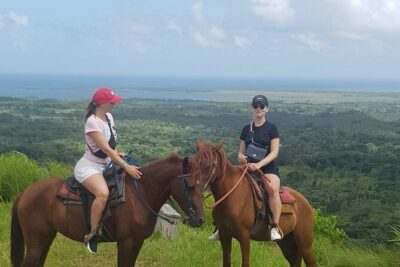
On the last trekking day, you head north and east toward the ranger station gate to the national park. This is your final day on the trail, and the trip makes room for one more riding moment: your last chance to give your horse its head and have a nice run.
Then you unload camels, meet vehicles, and head back toward Bayan-Ölgii with an overnight back at a ger camp. This is a good transition point—your body is tired from the mountains, but your nerves are calmer because the hardest grades are finished.
Getting value from $8,250: what’s included, what’s on you
At $8,250 per person, this is a premium price—no sugarcoating. What justifies it is that the trek covers a lot more than “a guide and a route.”
You’re paying for:
- Private transportation across long distances, plus flights (including the 3-hour hop to Bayan-Ölgii)
- Meals: 13 breakfasts, 13 lunches, and 13 dinners are listed as included
- Cultural programming: the UB theater show is included
- Field systems that matter in Mongolia: waterproof Tusker duffels, and the use of camels for your gear so you can trek more comfortably
- A private group setup, meaning you’re not blended into a large public tour
What’s not included is also straightforward: travel fees from your home origin to and from Mongolia. So you should budget for your international flight and any visa or onward travel costs that apply to you personally.
My take on value: if you want a long, multi-day Altai trek that blends culture, horse skill-building, and high-country hiking, this price can start to look like “paying for the real machine” that runs a remote expedition. If you only want a mild taste of scenery, it may feel steep for what you’ll actually do.
Who should book this trek (and who should think twice)
This is a strong fit if you:
- Want both horseback riding and hiking, not one or the other
- Like learning skills, like the riding basics and clinics Eddie Frank provides
- Can handle long days and cold or snow risk during mountain pass conditions
- Enjoy culture where you’re in gers and around working communities (not just looking at them)
It might be a harder fit if you:
- Prefer low-activity days in between major sights
- Get anxious when plans depend on weather and high-altitude conditions
- Are not comfortable with steep descents, long trekking hours, and the general unpredictability of remote terrain
Should you book the Mongolia Nomad Trek?
If your dream includes Mongolia’s western Altai Mountains—glacier country, river gorges, nomad games on horseback, and real interaction with Kazakh and other herder communities—this trek is worth serious consideration. The combination of Eddie Frank’s riding help, the practical gear system, and the way the route ties culture to movement makes it more than a scenic tour.
If you’re undecided, ask yourself one question: do you want to work for the views? If yes, this trek is the kind you’ll remember for years, not days.
FAQ
What is the duration of the Mongolia Nomad Trek?
It’s listed as 15 days (approx.).
Where does the tour start?
The meeting point is Buyant Uhaa Airport in Ulaanbaatar, Mongolia, with a start time listed as 12:00 am.
Is pickup offered and is there a mobile ticket?
Pickup is offered, and the tour features a mobile ticket.
What type of tour is it?
It’s a private tour/activity, meaning only your group will participate.
How physically demanding is it?
The trip states you should have a strong physical fitness level.
Are meals included?
Yes. Breakfast (13), lunch (13), and dinner (13) are listed as included.
What happens if weather is poor?
The experience requires good weather. If it’s canceled due to poor weather, you’ll be offered a different date or a full refund.