REVIEW · WOODSIDE ADELAIDE HILLS
Petaluma: Horseback Riding and Wine Tasting Tour
Book on GetYourGuide →Operated by Vinarchy · Bookable on GetYourGuide
A horse ride through vineyards beats most wine tours. You get hands-on time with the horses, then a guided tasting where the wines come with real context and an easy pace. The only real heads-up: you’re on a horse for the experience, so it’s not a fit for everyone physically or weather-wise.
What I like most is how smoothly the team sets you up, even if you’re not a confident rider, and how the tasting is guided rather than just you wandering the room. You’ll also get photo breaks with big vineyard-and-hills views, which is a lot nicer than just posing at a lookout. One possible drawback: transportation and meals aren’t included, so you’ll want a clear plan for getting there and eating after.
In This Review
- Key things worth knowing
- Why Horseback Through Petaluma’s Vineyards Feels Like a Real Experience
- Arrival at Hallmark Farm: Helmets, Horse Introductions, and Quick Confidence
- Your Vineyard Ride: Basic Maneuvers, Photo Stops, and On-Course Views
- Cellar Door Time: A Guided Tasting of Petaluma and Croser Wines
- Price and Value: What $138 Gets You in Two Hours
- Who This Tour Suits Best (and Who Should Skip It)
- Practical Tips That Make the Ride Easier
- The Best Way to Decide: Should You Book This Petaluma Ride and Tasting?
- FAQ
- How long is the Petaluma horseback riding and wine tasting tour?
- What’s included in the price?
- Where do I meet the host?
- Is transportation or meals included?
- Is the tour suitable for children?
- What should I bring with me?
Key things worth knowing
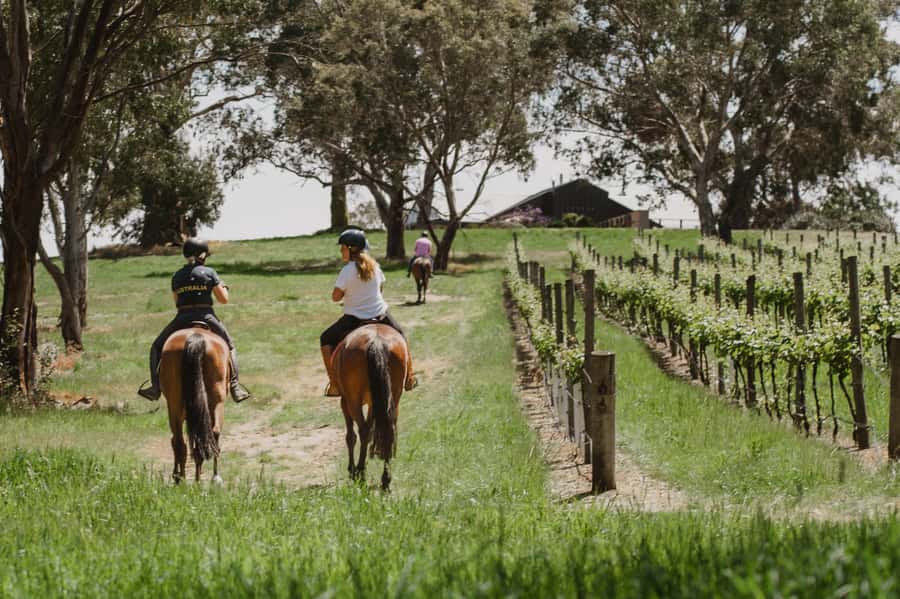
- Small group of up to 8 keeps the ride personal and the instruction practical.
- Helmet fitting and safety briefing happen before you’re on board, so you’re not guessing.
- Meet the horses at the hitching rail, then get basic maneuvers with your trail guide.
- About 45 minutes on the designated course with photo stops and commentary as you go.
- Guided tasting of Petaluma and Croser, including the Petaluma flagship range.
- Finish on the deck or by the fire, depending on the season.
Why Horseback Through Petaluma’s Vineyards Feels Like a Real Experience
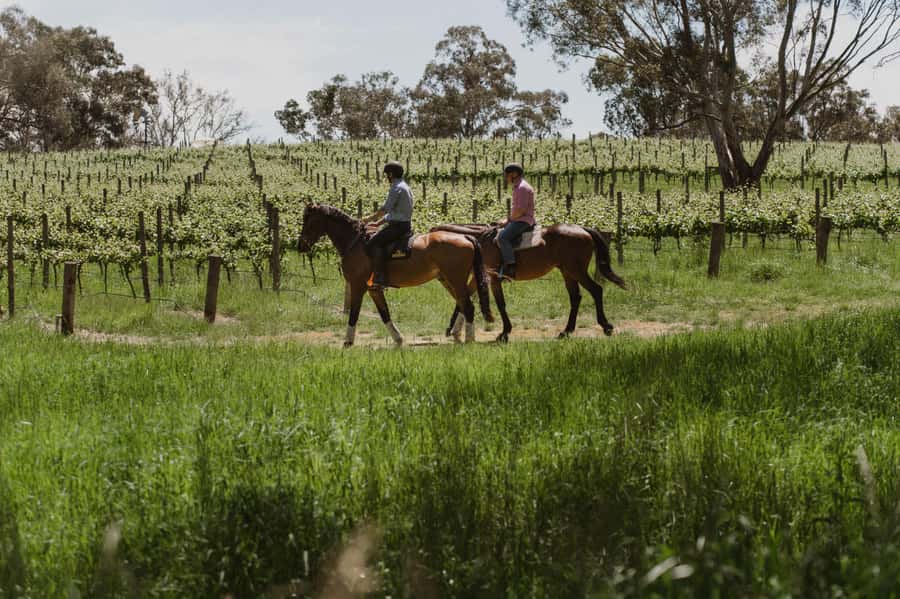
This isn’t a wine tour where you rush from room to room and call it a day. The real hook here is that you move through the vineyard setting on horseback, with a guide controlling the pace and offering story time along the way.
You’ll spend your first half of the tour learning the basics and getting comfortable in the saddle. That matters because it turns the ride from something intimidating into something you can actually enjoy. Then the tour flips gears at the cellar door, where the tasting connects the dots between what you saw outdoors and what you’re drinking indoors.
The other thing I appreciate is the balance: you’re not just sitting there. You’re doing small tasks (like basic maneuvers) with support, and you’re getting a guided run-through of the wines rather than an open-ended sampling session.
Arrival at Hallmark Farm: Helmets, Horse Introductions, and Quick Confidence
You meet your host at the cellar door, then you’re brought into the Hallmark Farm setup. The team takes care of helmet fitting and a safety briefing before you mount. That’s a big deal because it removes the uncertainty right at the start.
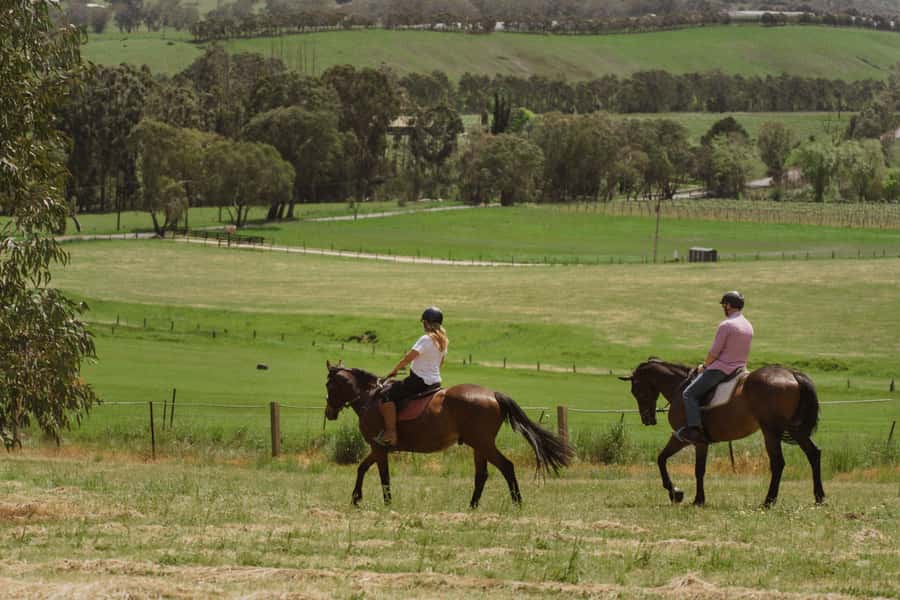
Then comes the part that makes this tour feel more grounded: you get to know the horses at the hitching rail. The horses are specifically selected to match riders’ needs, drawn from the Hallmark Farm stables in Woodside, owned by Megan Jones (Silver medal Olympian, Equestrian Hall of Fame member, Dual Olympian, and a World Championship Medalist in Aachen, Germany) and her husband, James Deacon. Even if you’re not into horse trivia, that level of care tells you the operation is run by people who live this sport.
After the briefing, you’ll get your questions answered. That little buffer helps a lot if you’re nervous. One of the best things you can do is ask about what to expect in the saddle, like how they’ll guide you and what you should focus on when you start.
Your Vineyard Ride: Basic Maneuvers, Photo Stops, and On-Course Views
Once you’re saddled up, you’ll start with basic maneuvers. You do them with your trail guide supporting you, which is the difference between a “try it once” moment and something that actually builds confidence.
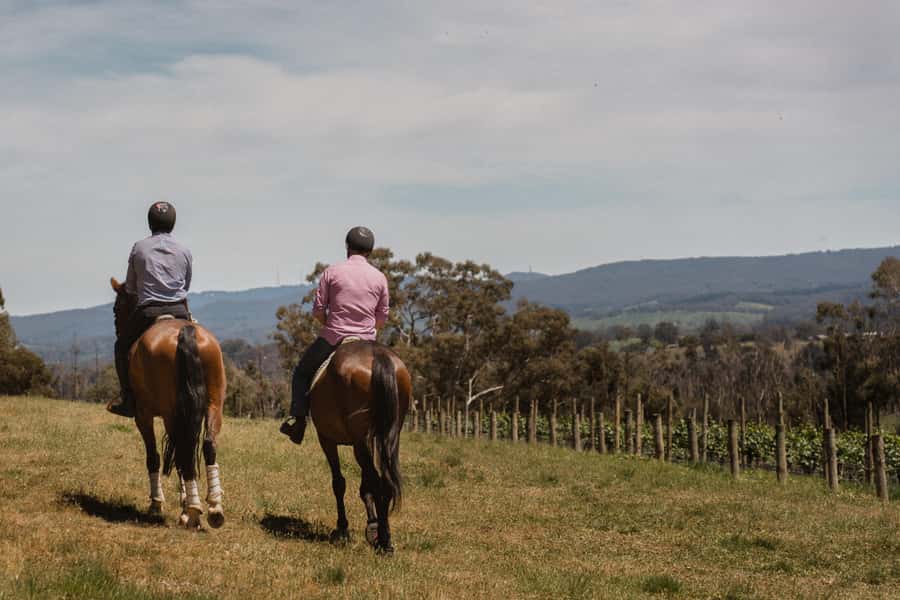
The guided ride itself is about 45 minutes around a designated course. The pace is described as relaxed, but you still get the fun part: moving through rows, seeing the terrain unfold, and feeling like you’re part of the property rather than just passing it.
Along the way, you’ll have opportunities to stop for photos. This is one of those small scheduling choices that changes everything. If you’re anything like me, you don’t want to take the camera out while you’re distracted by balancing or listening for directions. Photo breaks make it easier to actually get the shots without rushing.
As you ride, your guide also provides commentary about the site and Petaluma’s history. That turns the vineyard scenery into something you can name and understand, not just something pretty you pass by.
Also, if you’re new to riding, it helps that you’ll be guided to do the first steps correctly. Horses like Sid and Bachhus are specifically part of the experience you may ride, and the whole point is that you’re paired with a suitable mount rather than thrown onto whatever is available.
Cellar Door Time: A Guided Tasting of Petaluma and Croser Wines
After you return the horse to the hitching rail, you get a chance to settle in with rest, photos, and a brush down. That transition matters. It gives you a moment to come down from the action, freshen up a bit, and take in what you just saw before you start tasting.
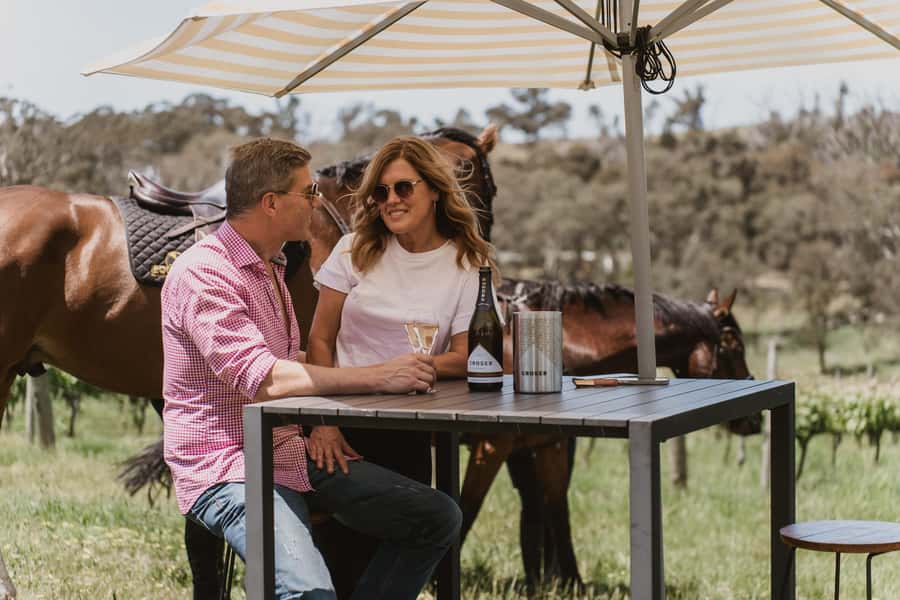
Then you move to the cellar door for welcome refreshments and a guided wine tasting. The tasting is built around a curated lineup that includes Petaluma and Croser wines, and it specifically aims to cover the flagship range. Translation: you’re not just sampling random bottles. You’re hearing how the winery thinks, what they focus on, and why certain vineyard sourcing choices matter.
The guide also ties the tasting back to the brand ethos: an obsession with distinguished vineyards and sourcing fruit from the best regions. That kind of explanation is what makes wine tasting feel more useful. Instead of tasting in a vacuum, you start tasting with a mental map.
The setting for your tasting is also worth noting. After your tastings, you finish on the deck in warmer months or by the fire in cooler months. It’s a simple touch, but it turns the ending into a “stay a bit longer” moment rather than a quick stamp-and-leave.
Price and Value: What $138 Gets You in Two Hours
At $138 per person for 2 hours, you’re paying for a combined experience: horse handling support, guided trail time, and a guided tasting with refreshments. The value comes from the fact that this is not two separate experiences stitched together. It’s one flowing session where the vineyard ride sets up what you’ll understand at the cellar door.
A normal wine tasting alone might cost about the same once you add transportation and time. Here, you’re also getting:
- Helmet fitting and safety briefing
- A small group setup (limited to 8 participants)
- A guided ride (including basic maneuvers and about 45 minutes on-course)
- Guided tasting of Petaluma and Croser
- Refreshments at the cellar door
What you should factor in is what isn’t included. Transportation to and from the activity is not part of the price, and meals aren’t included. So your real cost is the tour fee plus getting yourself there, and then budgeting for food afterward.
If you’re staying nearby and you like active, guided experiences, this is a strong value. If you’re expecting a full-day winery crawl with multiple stops, this is more of a focused two-hour plan with depth in just two parts.
Who This Tour Suits Best (and Who Should Skip It)
This tour welcomes all riding levels, and that’s a major selling point. Beginners usually do best when there’s structure, step-by-step instruction, and a guide watching you the whole time. That’s what you’ll get here: helmets, briefing, basic maneuvers, and a guided course.
It’s also great for anyone who likes wine but wants to make it more than a passive activity. Horseback changes how you perceive the property. You’re higher, you’re moving, and you’re looking across vineyard hills in real time, not from behind glass.
On the flip side, it’s not suitable for:
- Children under 9
- Pregnant women
- People with back problems
If any of those apply, don’t try to “power through.” The tour design depends on riders being able to sit comfortably and follow basic safety instructions.
Practical Tips That Make the Ride Easier
Even when you’re a first-timer, you can make the whole experience smoother with a few basics.
Bring comfortable shoes. Think grip and stability, not fashion. You’ll also want sunscreen and water, because you’ll be outside during the ride and it’s easy to underestimate sun and warmth in vineyard country.
Wear weather-appropriate clothing. This is a farm setting, so conditions can shift fast. If it’s cooler, you’ll still have that cozy finish by the fire during tastings, but it helps to show up ready for the start of the day.
One timing note: arrive about 15 minutes before your activity starts. That buffer gives you time for helmet fitting and settling in without feeling rushed.
And don’t forget your camera. The photo stops aren’t the only scenic moments, but they are the best chances to capture the vineyard hills and vineyard rows without juggling your phone and your balance.
The Best Way to Decide: Should You Book This Petaluma Ride and Tasting?
Book it if you want an experience that mixes active instruction with guided wine education. It’s a strong choice for couples, small groups, or solo travelers who like structure and don’t want a day that feels like a checklist.
Skip it if you’re looking for a purely social winery hang, because you’ll be focused first on riding basics and safety. And if you’re worried about comfort or your physical situation isn’t a match for riding, it’s better to choose a different style of wine tour.
If you’re deciding, here’s the simple checklist I’d use:
- You’re okay with a horse ride for part of the experience.
- You want a guided tasting with Petaluma and Croser, including the flagship range.
- You can handle 2 hours on a schedule with no transportation or meals included.
If that’s you, this tour is an easy yes. You’ll leave with two kinds of memories: the vineyard ride you can still feel, and the wines you’ll actually understand because someone explained what you were tasting and why.
FAQ
How long is the Petaluma horseback riding and wine tasting tour?
The tour duration is 2 hours.
What’s included in the price?
It includes helmet fitting and a safety briefing, a guided trail ride through the vineyards, a guided wine tasting, refreshments at the cellar door, and opportunities for photos.
Where do I meet the host?
Head to the cellar door, where your host meets you.
Is transportation or meals included?
No. Transportation to and from the activity and meals are not included.
Is the tour suitable for children?
No. Participants must be over 9 years old.
What should I bring with me?
Bring comfortable shoes, a camera, sunscreen, water, and comfortable clothes suitable for the weather.